

Sensor Common Metadata Specification
Overview
The Sensor Common Metadata Specification (SCMS) is a community-driven metadata specification for describing sensors used in environmental exposure health research. It is a core deliverable of the SMARTER project (Sensors and Metadata for Analytics and Research in Exposure Health), a University of Utah project initiated in 2024 that develops shared, generalizable metadata and data management tools to support reproducible exposure health research. The SCMS builds on earlier work from the NIBIB-funded PRISMS program (Pediatric Research using Integrated Sensor Monitoring Systems).
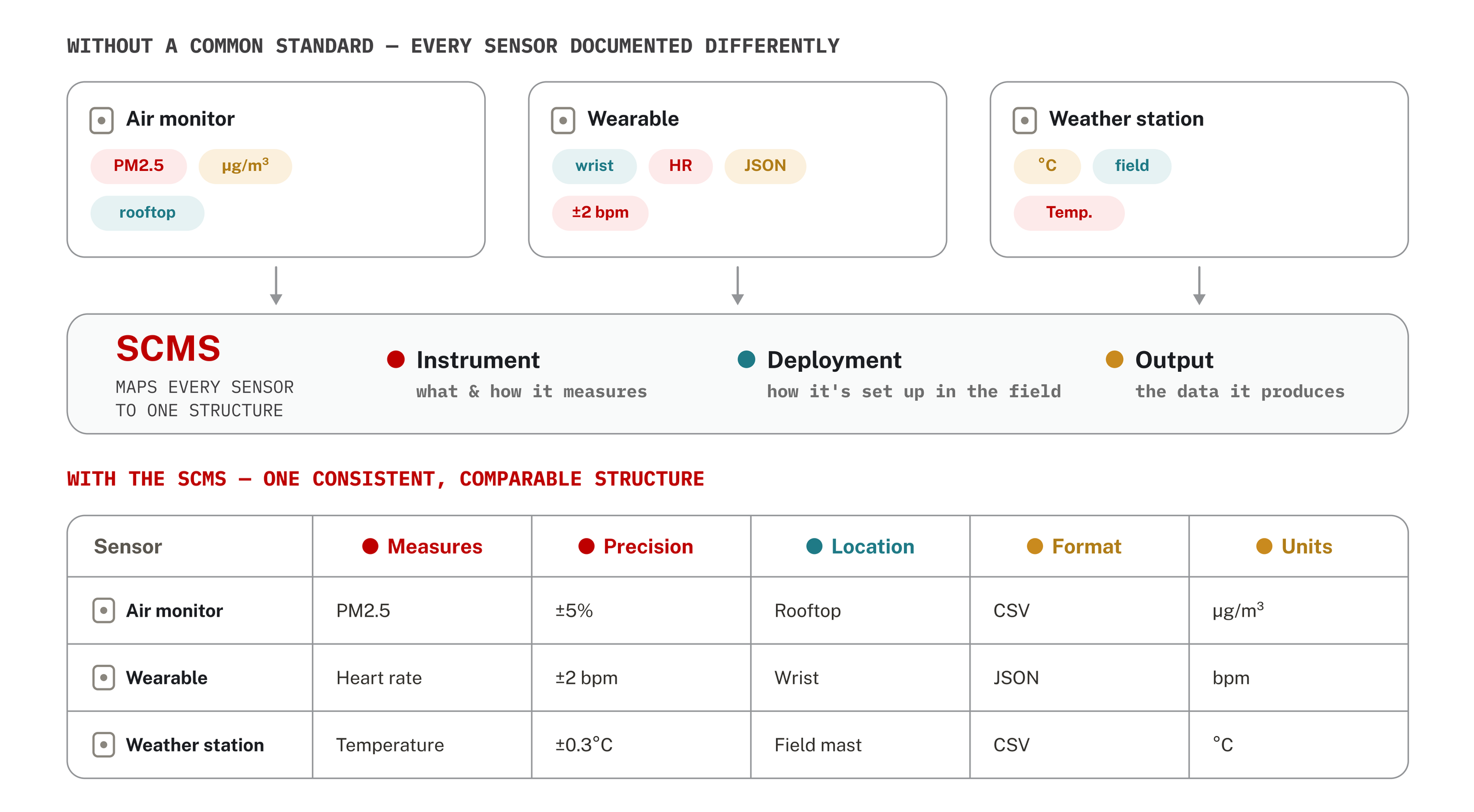
Researchers increasingly use sensors to objectively measure environmental exposures and their effects on health. However, sensor data are heterogeneous — spanning physical, chemical, and biological signals across varied temporal and spatial scales — and there is currently a lack of consensus on metadata standards and conceptual models for the exposure domain. Without standardized metadata, it is difficult to find, assess, share, and reuse sensor-based exposure data in a FAIR (Findable, Accessible, Interoperable, Reusable) manner. The SCMS addresses this gap by providing a common structure for documenting sensors and their deployments.
Purpose
The SCMS is designed to:

Describe and document sensor characteristics that are important for sensor data use and reuse in environmental health research.
Describe and document sensor deployments, capturing environmental and deployment attributes useful when analyzing measurements.

Support data quality assessment across different instruments and deployment environments .

Support harmonization and integration of data collected from various sensors.

Provide guidance for structuring and storing sensor output data .. ..
Core Domains
The specification is organized around three principal domains that follow the sensor lifecycle:

Instrument
The physical characteristics and capabilities of a sensor device.

Deployment
How a sensor device is set up and used in research data collection, including physical setup, mounting, and operational context

Output
The characteristics of sensor measurements, including data formats, storage, and calibration requirements.
Development Approach
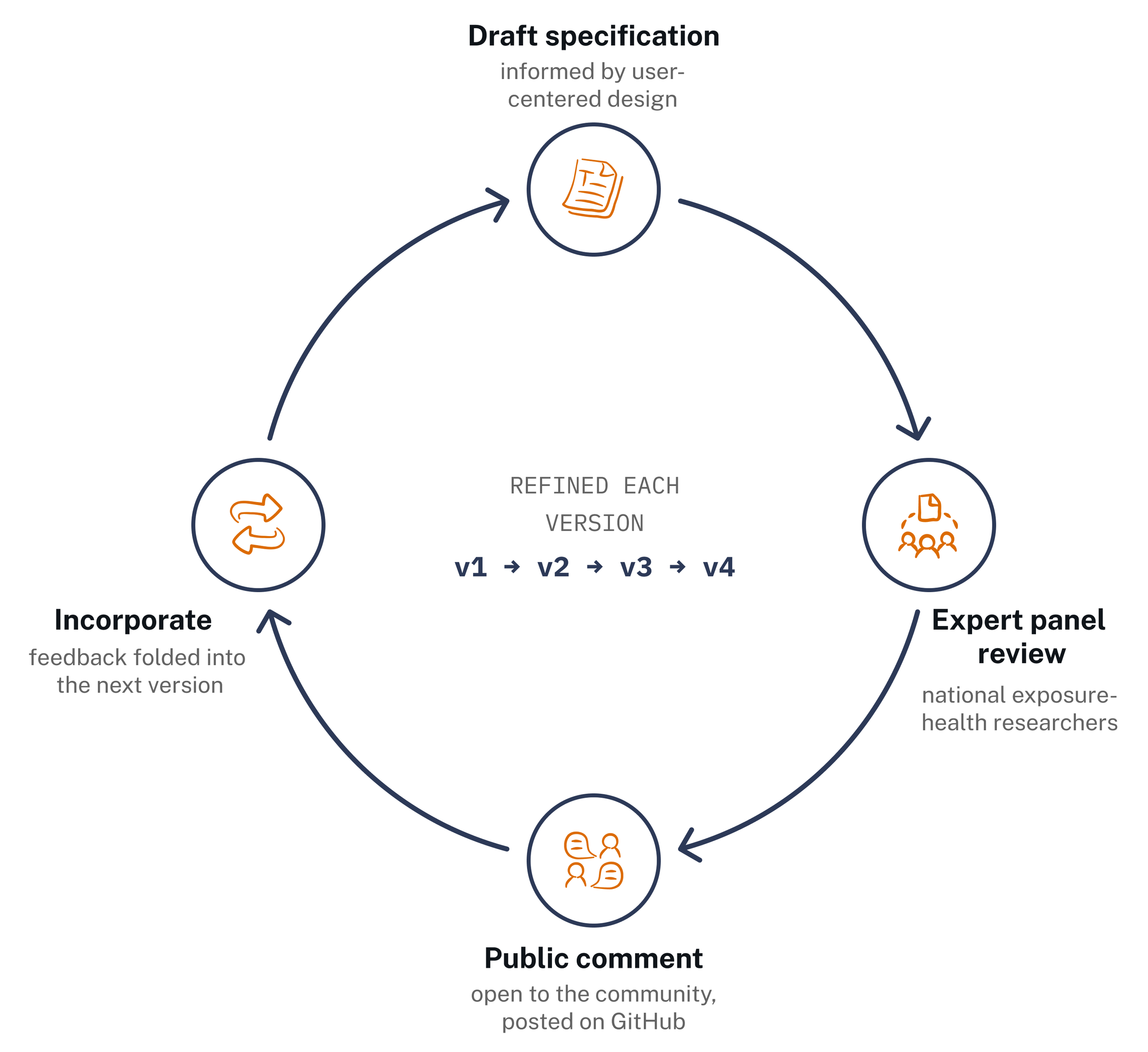
The SCMS is developed through an iterative, community-driven process. Draft specifications are reviewed by a national expert panel of exposure health researchers, informed by user-centered design activities, and released for public comment. Feedback from the expert panel, public comment, ongoing research activities is incorporated into each successive version.
Specification Versions (GitHub)
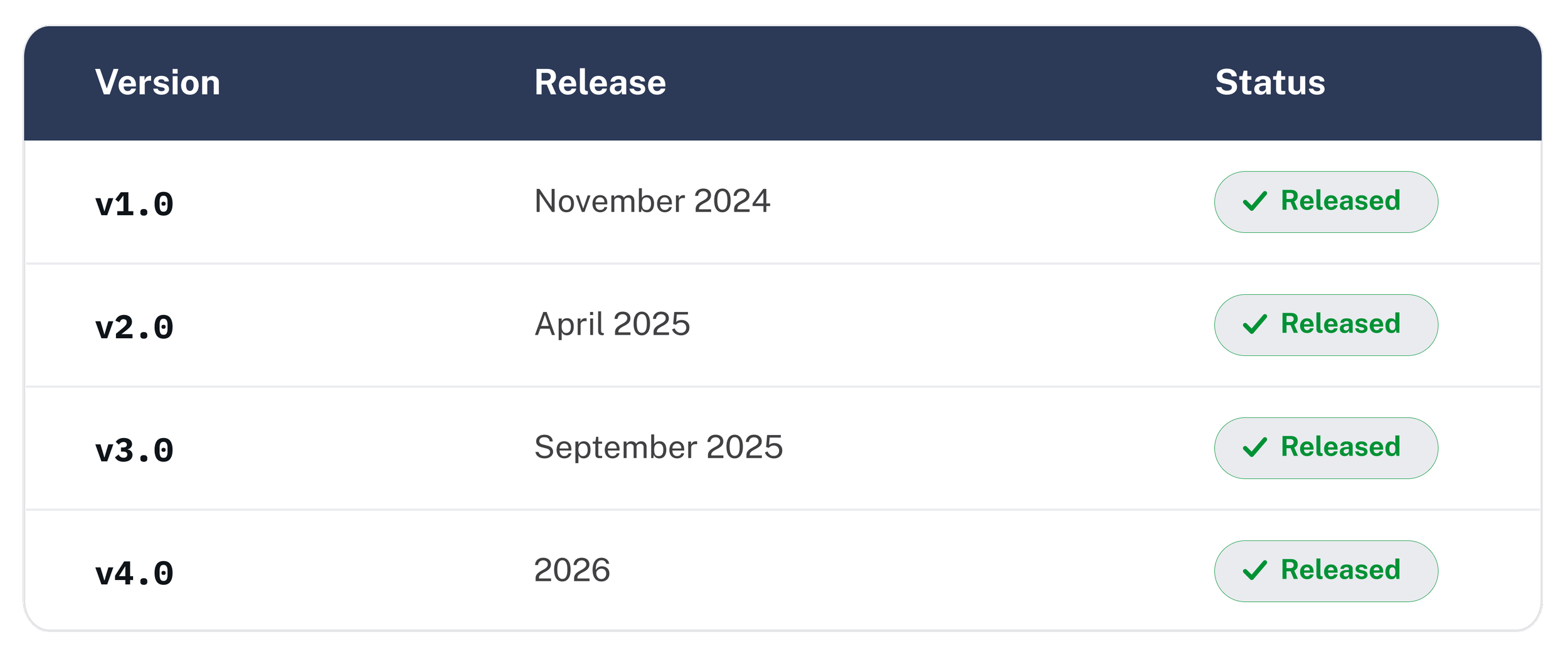
The complete specification, including attributes and implementation guide, is available on GitHub: Click Here
Planned v4.0 updates include data security, precision and bias, time lag, additional deployment details (e.g., physical mounting), display control, data storage and overwrite rules, calibration requirements, timestamp sources.
The SCMS is released under the MIT License *
Public Comment Opportunities
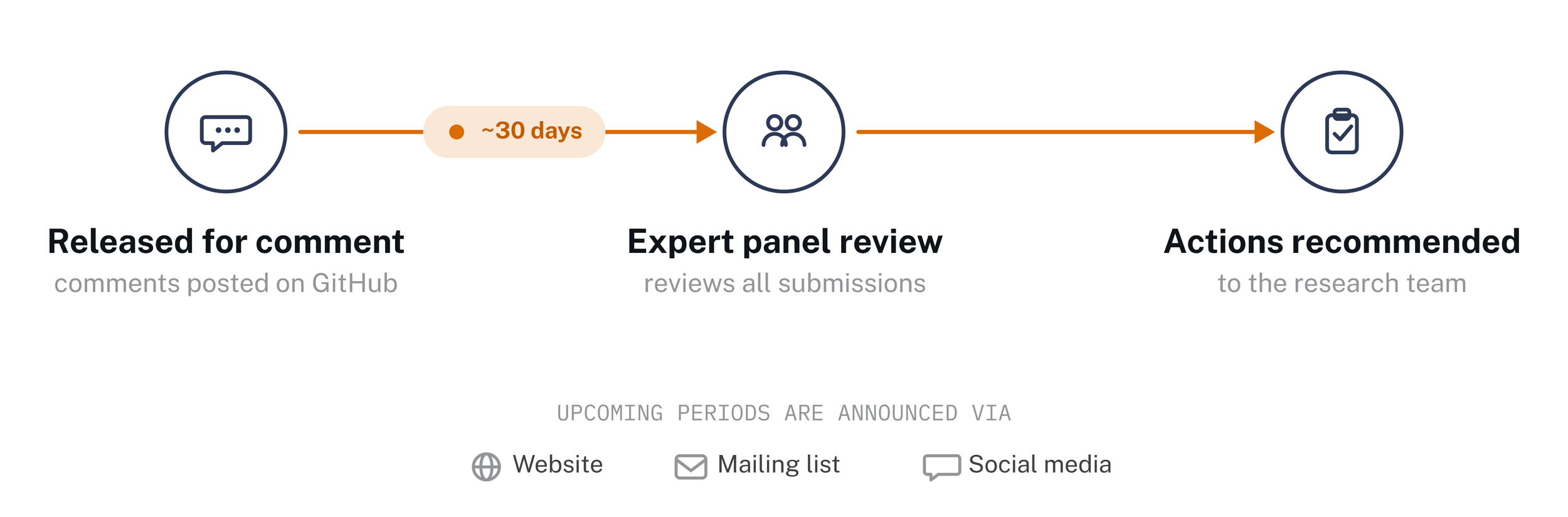
The SMARTER project releases study products for a public comment period, typically 30 days, with comments posted directly to GitHub. After each comment period, the expert panel reviews the submissions and recommends actions to the research team. Upcoming comment periods are announced through our website, mailing list, and social media channels.
Current and past public comment opportunities are found here.
To be notified of future comment periods, join our mailing list, or contact us at smarterexposurehealth@utah.edu.
The SCMS is supported by the National Institute of Environmental Health Sciences (NIEHS) under Award Number 1R24ES036134-01 (SMARTER); the National Center for Advancing Translational Sciences (NCATS) under Award Numbers UL1TR001067 and UM1TR004409 (Utah CTSI); and the National Institute of Biomedical Imaging and Bioengineering (NIBIB) under Award Number U54EB021973 (PRISMS). The content is solely the responsibility of the authors and does not necessarily represent the official views of the National Institutes of Health.